The Assemblies of God is a classical Pentecostal denomination founded in 1914 in Hot Springs, Arkansas. Beginning with 300 people, it has blossomed over the century into over 3 million adherents in the U.S. and over 85 million globally across 150 nations.
If you read about the AG online and in some academic works, you will notice that the AG is regularly referred to as a “white” Pentecostal denomination. On the surface, this characterization seems appropriate. After all, the majority of the founding members were white. But it has also been a majority white fellowship for much of its history. So in some ways, this label can be useful for recognizing that fact.
But to say that the AG is a “white” denomination is simply not accurate, and hasn’t been accurate for decades now. In truth, the AG was never “all white,” and it is rapidly becoming a non-majority white fellowship. Its ministers, its churches, and even its leadership are reflective of the fellowship’s diversity.
Here are some important and surprising facts to counter the characterization that the AG is a “white” denomination.
The AG was Not Founded as a White Fellowship
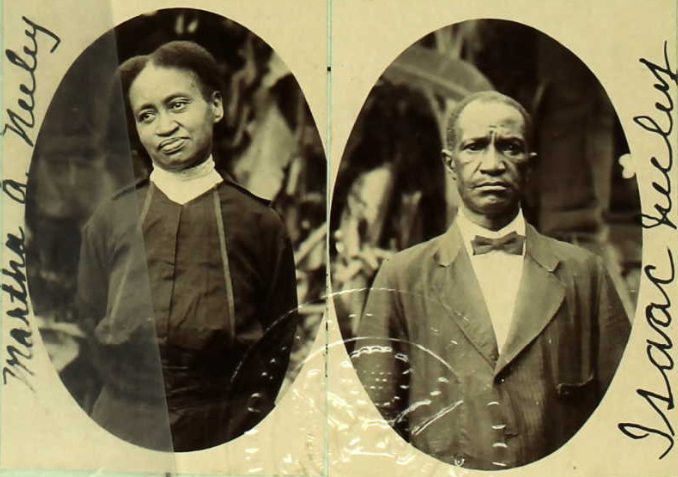
When the first General Council was formed in 1914, there were no black ministers among the ranks. However, there were two Native Americans and one Hispanic minister who joined the fellowship at the first council. Over the next couple of years, several African Americans also joined as ministers in the AG, including Elsworth Thomas (1915), Pearl Hogan (1917), Issac and Martha Neeley (1920), and Cornelia Jones Robertson (1923).
Hispanics were also some of the most important early Ministers. Antonio Ríos Morin joined the AG in 1914. The first Hispanic female to be credentialed was Dionicia Feliciano in July 1916. She and her husband Solomon pastored in California and Puerto Rico. Juan Lugo and Isabelle Lugo joined the AG in 1916. Francisco Olazábal joined the AG in 1918. The AG even had several Latin American Bible colleges to train Hispanic ministers.
In my book, Aspects of Assemblies of God Origins, I also counter the claim that the AG separated from C.H. Mason’s Church of God in Christ in order to be a “white Pentecostal denomination,” as is often claimed. Though its beginnings are primarily among white Pentecostals, the AG was not intentionally exclusionary nor trying to be “white.”
Growth Through Diversity
One of the biggest headlines is that the AG is growing, while many other denominations are in decline. One of the key factors in that growth is its diversity.
In the past three decades, the overall demographics of AG churches have shifted. Over 40% of all AG churches are ethnic churches, doubling from 2,400 in the 1990s to over 5,000 today. Credentialed minorities constitute nearly 20% of all new credentialed ministers in the recent decade.
The biggest source of growth is Hispanic churches. In 1971, the AG had 403 Hispanic Churches and ordained 827 ministers. Today, there are over 2,200 Hispanic Churches with over 225,000 members. Hispanic Churches make up 23% of all AG churches!
The African American population in the AG is also a story of growth. In the early 2000s, African American adherents numbered 164,000. That number has doubled to 324,000 as of 2023. The number of African American ministers has risen from 226 to over 400 today.
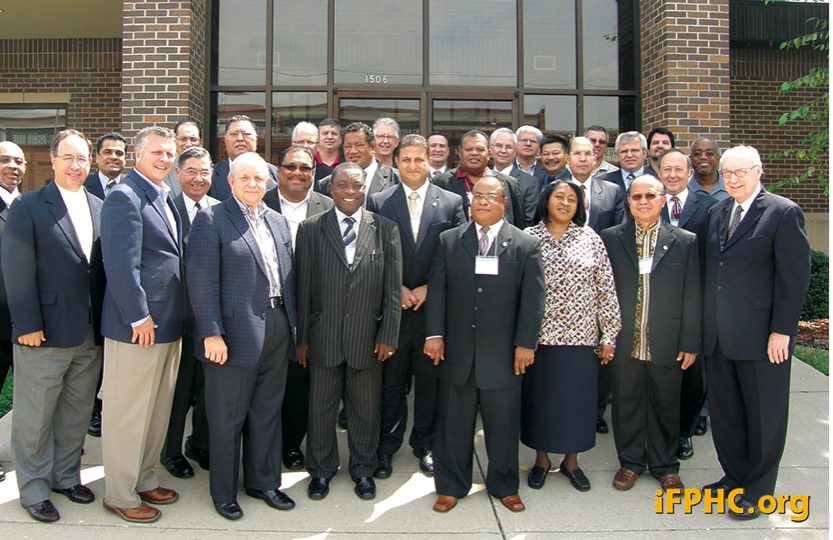
But the AG also has 24 other ethnic districts that contribute to that diversity in the U.S.
Growth in Leadership
The final factor that shows that the AG is not a “white” denomination is its leadership. For several decades, the AG has intentionally incorporated minority representation in its leadership structure.
In 2019, Wilfredo “Choco” De Jesús became the first Hispanic to join the Executive Leadership Team as general treasurer. In 2024, De Jesús was appointed as executive director of U.S. Missions. Other Hispanics elected to Executive Presbytery positions include Jesse Miranda, Manuel A. Alvarez, Maricela H. Hernández, Melissa Alfaro, Rich Guerra, and Daniel de León.
In 2009, Zollie L. Smith became the first African American to be elected to the Executive Leadership Team. In 2017, Malcolm Burleigh was elected to succeed Smith as director of U.S. Missions. In 2017, Samuel Huddleston, Northern California-Nevada assistant superintendent, became the first person to fill the African American minister position on the Executive Presbytery. Other African Americans who are currently serving or have served as an executive presbyter include Walter F. Harvey and current NBF president Darnell K. Williams. In 2025, Williams was elected president of North Central University, becoming the first African American to lead an AG college or university.
The AG is an Interracial Pentecostal Denomination
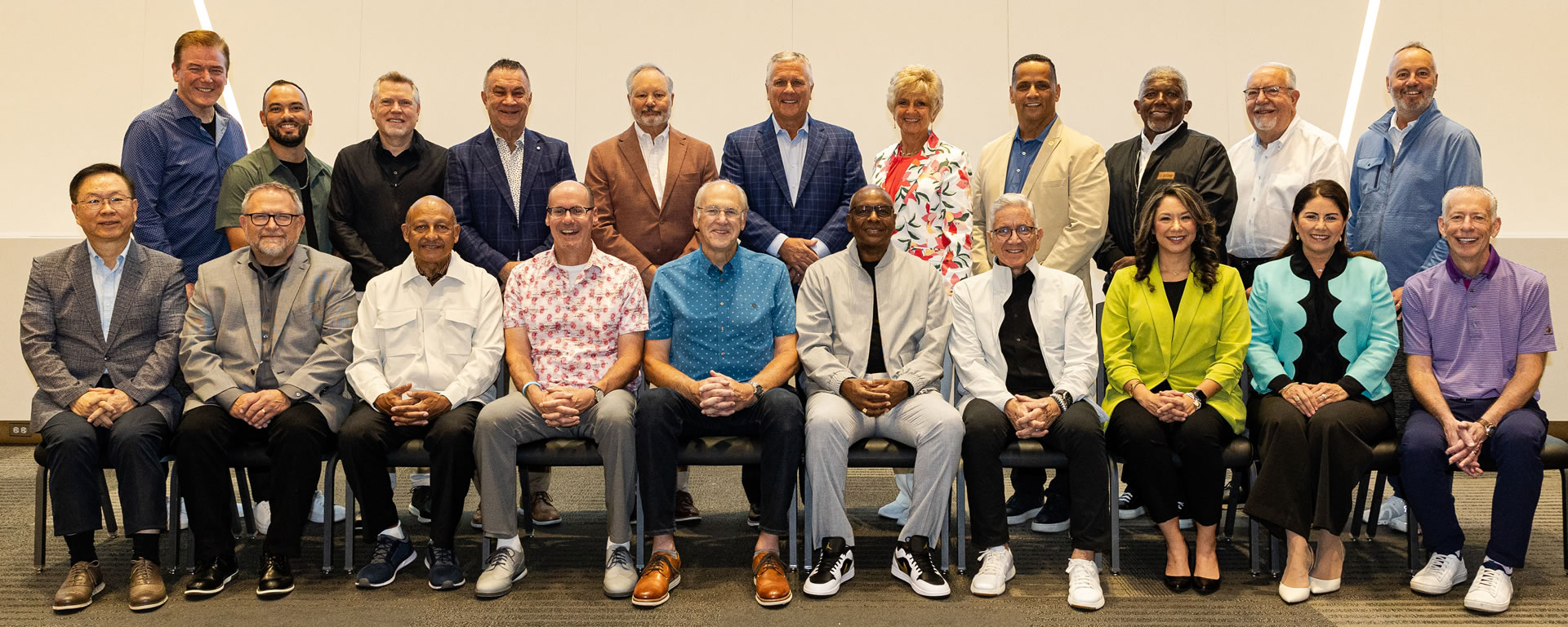
Each of these factors demonstrates that the AG is not a “white” denomination. It is a diverse, interracial denomination, both in its churches and in its ministerial composition. The 2023 AG statistics report that the fellowship in the U.S. is 55% white. While it is still a majority, it is quickly headed toward a minority due to the 23% Hispanic, 11% African American, and another 10% other ethnic populations that are growing rapidly.
According to the Pew Research Center, the AG is far more diverse than Christianity in America overall, which is 70% white. Evangelicalism is 80% white. The AG is more diverse than virtually every other denomination in the U.S., including American Baptist (73%), Southern Baptist (85%), Nazarene (88%), United Church of Christ (89%), and United Methodist (94%).
The history of the AG is one of growth in diversity. It didn’t always get it right on matters of inclusion. But today, the diversity of the movement is part of its strength and is its future.
If you want to learn more about the Assemblies of God, its history, and its growth in diversity, you can read my newest book, Assemblies of God: Our Story from Gospel Publishing House or my other books on AG history.

 Daniel D. Isgrigg
Dr. Isgrigg,
Great email.
Someone one you could have included on the list of Hispanics who serve on the Executive Presbytery is the superintendent from the SoCal Network, Rich Guerra. He currently serves as the Southwest Regional Presbyter on the Executive Presbytery. He is the first Hispanic to serve as the superintendent of the SoCal Network. His grandfather, and perhaps his grandmother, immigrated from Mexico.
I enjoy the work you do. I am a life-long member of the Assemblies of God, as is my wife. My grandfather, John Crouch, is in that famous picture taken in Hot Springs at the founding of the Assemblies of God. My wife and I are AGUS missionaries.
May God bless you as you serve Him.
Jim Gutel jgutel@gmail.com 714-454-3468
“We stand on the dividing line of the empires of darkness and light.” Adoniram Judson – Missionary to Myanmar 1813 – 1859
Thanks for mentioning that. I will ad him.