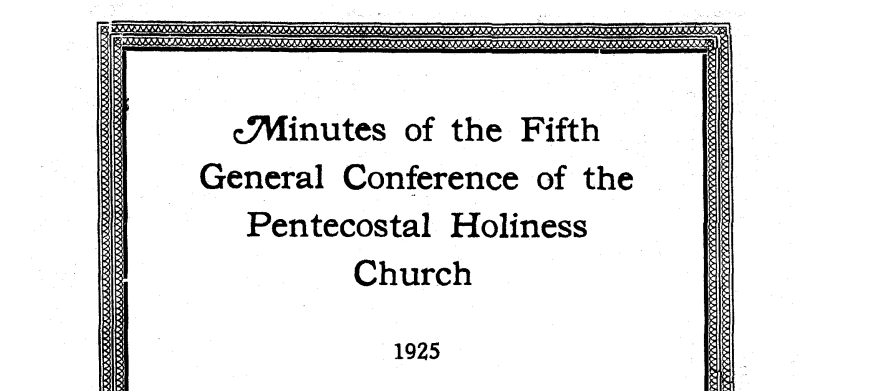
The issue of racism and the KKK in early Pentecostalism is a widely discussed topic in Pentecostal scholarship. While researching this topic in the Consortium of Pentecostal Archives, I found the 1925 Pentecostal Holiness Church General Conference report. In this conference, there was a session in which the General Board members, one by one, reported to the Conference whether they, or anyone in their jurisdiction, was affiliated with the Ku Klux Klan (See it here).
In the 1920s, the KKK had a habit of visiting churches and religious revivals to offer a donation in order to ingratiate themselves with churches and build support for their cause. The prevalence of KKK donations to Pentecostal ministers led to questions about whether it was acceptable. So much so, apparently, that it became an issue at the 1925 General Conference for the Pentecostal Holiness Church.
Early in the meeting, the S. A. Bishop, the Assistant Superintendent, requested that each member of the General Board report on any associations with the KKK. One by one, the bishops answered.
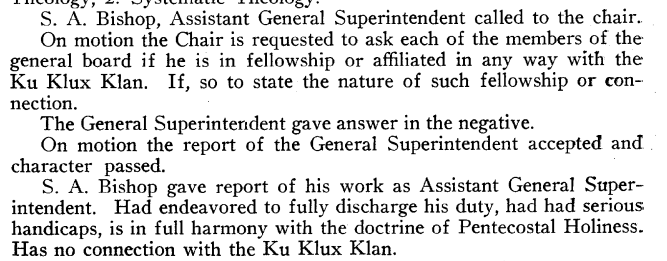
The General Superintendent, J. H. King, “reported in the negative.”
S. A. Bishop, Assistant General Superintendent, reported he has “no connection with the Ku Klux Klan.”
E. D. Reeves, Assistant General Superintendent, reported, “Klan negative.”
G. F. Taylor, General Treasurer, reported: “that he was not connected with the Ku Klux Klan, but that he felt free to accept donations.” (Taylor also has a Q&A article in the PHA affirming this)
L. R. Graham, General Secretary, reported “Klan negative.”
F. M. Britton reported “no connection and no affiliation with the Klan.”
Ralph Taylor reported he had “no fellowship or affiliation with the Klan.”
F. L. Bramblett reported he “has no fellowship nor affinity with the Klan”
P. F. Beacham reported he “has no fellowship nor affiliation with the Ku Klux Klan.”
R. B. Beale reported, “Has no affiliation whatever with the Klan.”
A. H. Butler reported, “Has no fellowship nor affiliation with the Ku Klux Klan.”
After that, a motion was presented asking the various state conference Superintendents to report KKK associations. This was followed by a series of reports from various states, in which several also reported: “Klan Negative.”
J. B. Todd of Georgia noted he “is not in fellowship with the Klan and knows of no one in his conference who is.”
E. I. King of Missouri noted that he himself was “free personally” from the Klan, but “cannot state so for the Conference.” But he also reported he is “doing his best to clear his conference of it.”
Jerome Hodges reported East North Carolina “has no connection or affiliation and knows of no one in his conference who has.”
C. A. Stroud of West Nortch Carolina too reported “neither he nor any of his conference in fellowship or affiliation with the Klan.”
S. E. Stark and Dan W. Evans of Oklahoma both reported they are “not and knows of no one in his conference who is in fellowship or affiliation with the Klan.”
S. W. Kenedy and F. M. Bramblet of South Carolina reported they have “no fellowship nor affiliation with the Klan and knows of no one in his conference who does.”
F. M. Kidd of Texas reported, “Not in fellowship nor sympathy with the Klan and knows of no one who is in his conference.”
D. Wiley of Tennessee reported, “Is not in any way connected with the Klan and knows of no one in his conference who is.”
All in all, every single member of the governing body of the Pentecostal Holiness Church in 1925 reported that they were not members of nor connected to the KKK. Almost all reported knowing of no ministers who were, except in Missouri, where the superintendent said they were working to remove them.
The sentiments against the KKK in the PHC continued in the paper. The next month, in the Pentecostal Holiness Advocate, R. B. Hays, said:
“I have heard that there were some professors of Pentecost that belong to the K. K. Klan. God have mercy on any Pentecostal person that belongs to K. K. Klan. Some of our preachers are afraid to preach against them, and some editors are afraid to publish anything against them. But truth is truth, and God says “Come out from among them and be ye separate.'” (“Need of Separation,” PHA, June 4, 1925)
J. H. King followed in October with this statement:
“We have those that have gone into the K. K. Klan and others whose hearts are in it. They carry a Klan heart in their bosom and are as much in it as he who has hatred
in his heart is a murderer. . . The Klan and the Pentecostal Church cannot harmonize. The one destroys the Spirit of the other. This has been proven on one or more cases” (“Are We Dead,” PHA, October 8, 1925).
There is no doubt that some white Pentecostals in this era affiliated and had sympathies with the KKK. Many Pentecostal histories acknowledge this fact. There are a few mentions here and there in Pentecostal papers that ministers received these offerings and a few other mentions of high-profile early Pentecostal leaders identified with the KKK.
But this event of accounting the prevalence (or lack thereof) is not widely documented. This story is missing from most Pentecostal histories except for brief mentions in Vinson Synan in Old Time Power (1973) and Doug Beacham in A Brief History of the Pentecostal Holiness Church (1983). This event seems significant in the full story of early Pentecostals and racism. At minimum, it suggests that in the IPHC, the KKK was not prevalent among its ministers, even in the South.
You can read these minutes on the Consortium of Pentecostal Archives Here
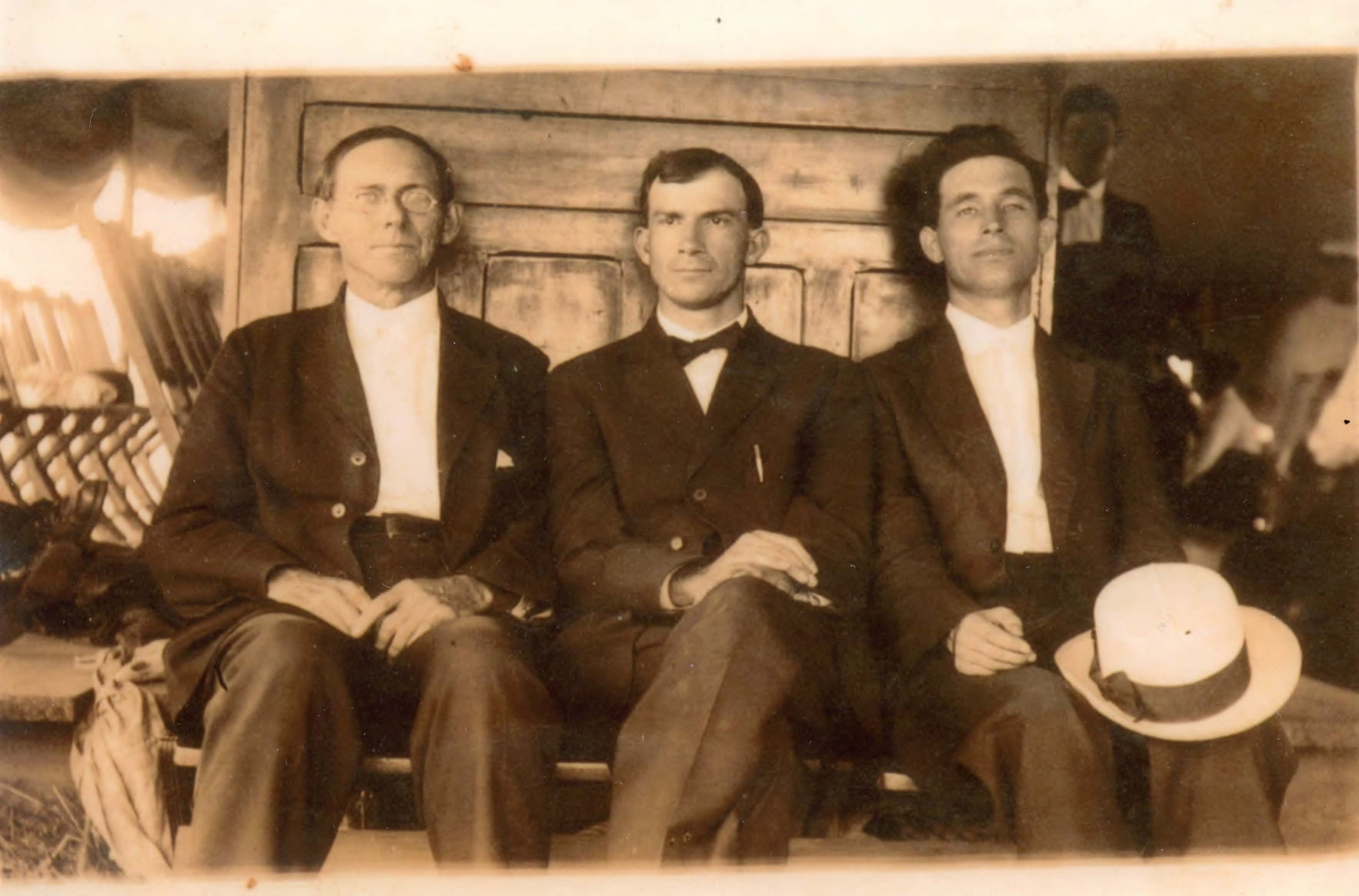
For a related story, see the history of Beno Hall in Tulsa where Oral Roberts was instrumental in converting a KKK building into one of the largest Pentecostal Holiness churches in America
 Daniel D. Isgrigg