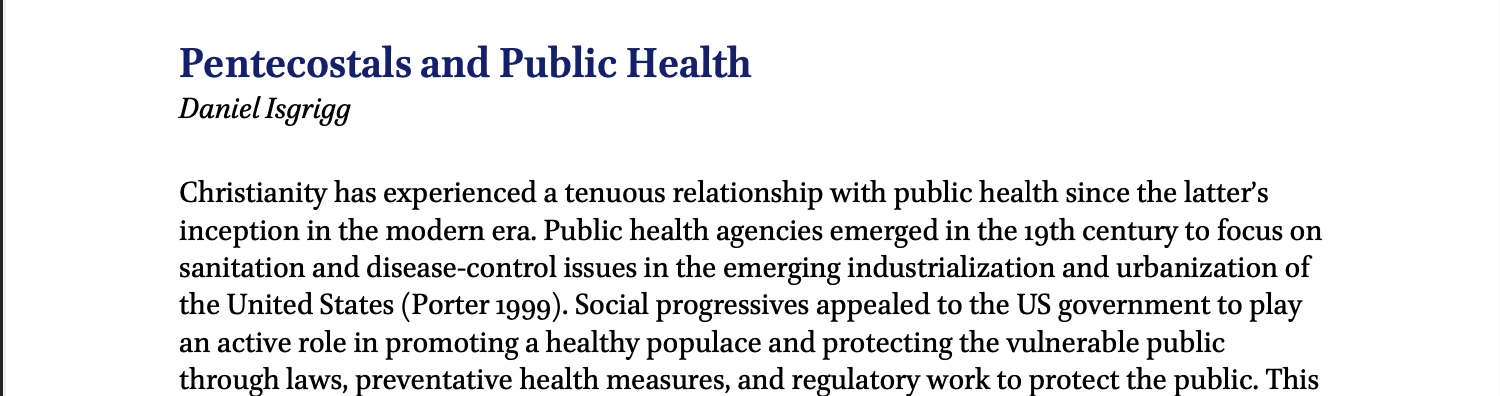
My latest publication is an essay on “Pentecostals and Public Health.” This essay is featured in an edited volume on North America as part of the Brill Encyclopedia of Global Pentecostalism Supplement Series. The essay focuses on how Pentecostals responded to various aspects of public health.
The essay was a continuation of work I had already published in response to the COVID-19 pandemic. In the previous essay, I examined early Pentecostals’ responses to the 1918 Spanish Influenza pandemic and compared them with modern Pentecostal responses.
This essay builds on that research, expanding it to other areas of public health, including medicine, public health institutions, vaccines, contraception, and other public health-related issues as captured in Pentecostal publications. It was very interesting to look at how Pentecostals navigated these various controversies and the theologies that drove their acceptance, rejection, or accommodation of these issues.
The essay is only available by purchasing a fairly pricey volume or through academic institutional access (although I think public library interlibrary loan could probably get it for you).
For copyright reasons, I cannot post the essay. Instead, I thought I would share a few excerpts that may be of interest. Granted, they will be isolated and won’t have all the context. But hopefully, it will provide a glimpse into the research in the essay, in case you want to seek it out.
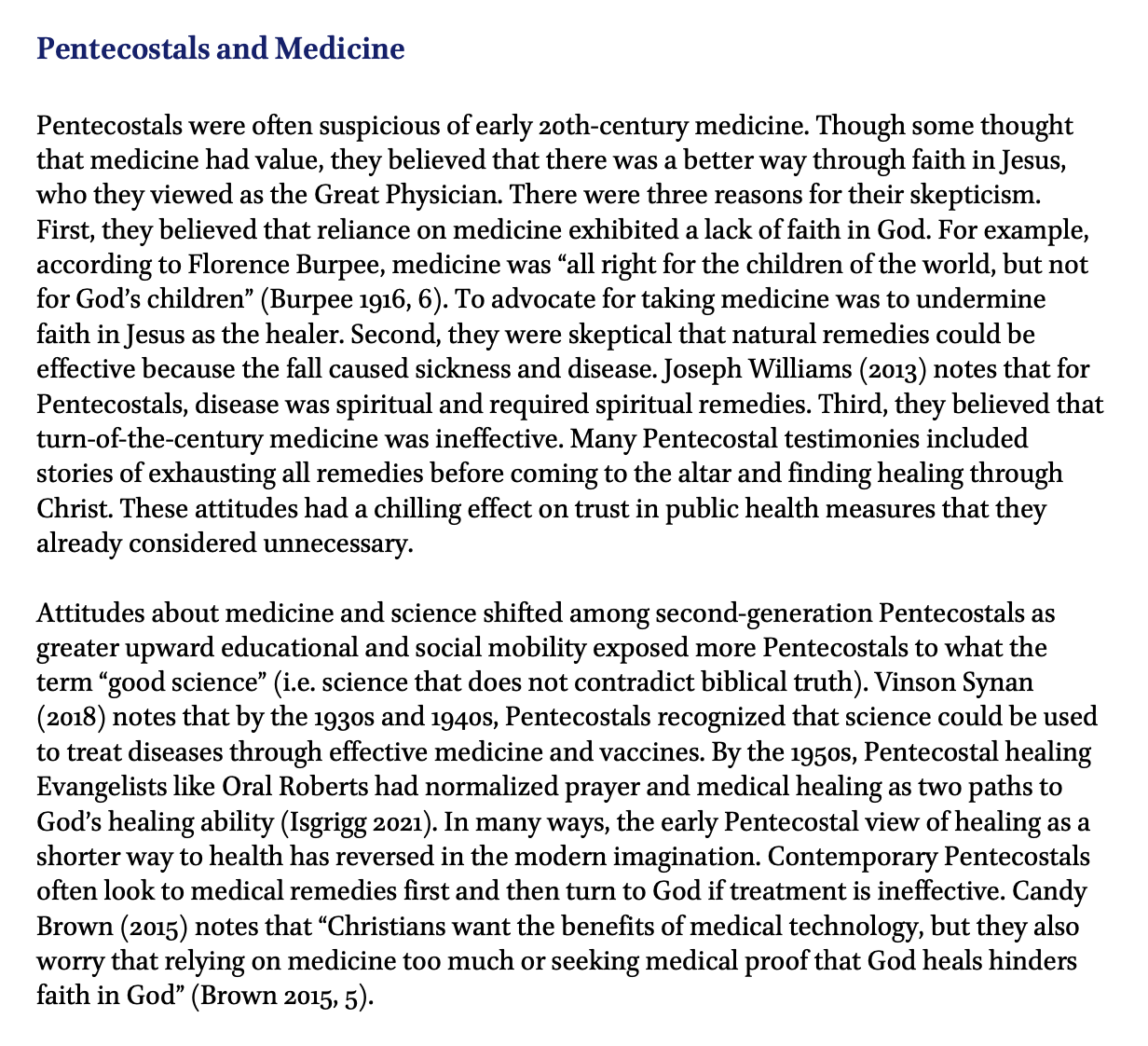
Here are some thoughts on Pentecostals and modern medicine. While early Pentecostals were leery of modern medicine, by mid-century attitudes shifted to regard medicine as a path to God’s healing.
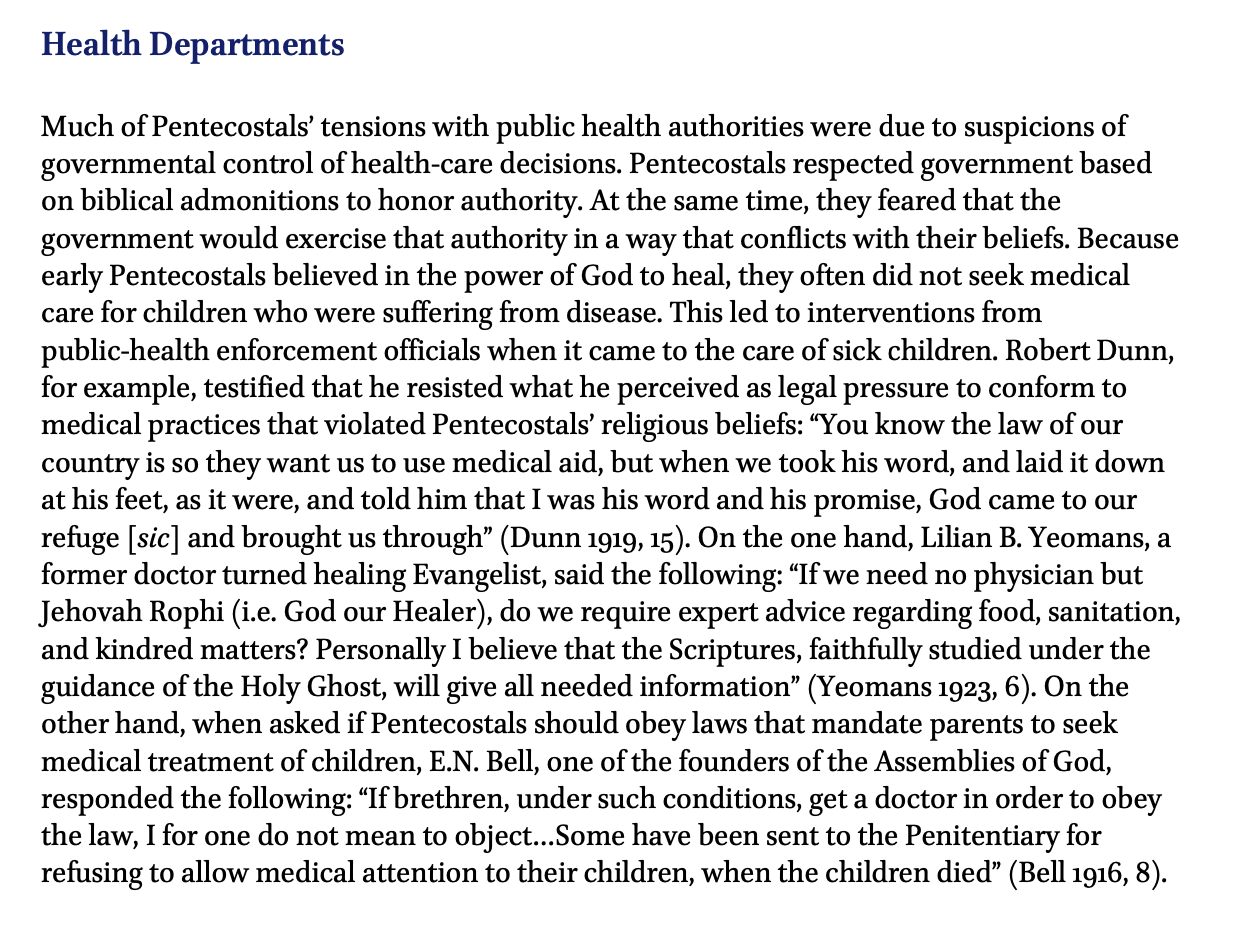
The 1918 Spanish Influenza helped reveal how early Pentecostals viewed Public Health Departments.
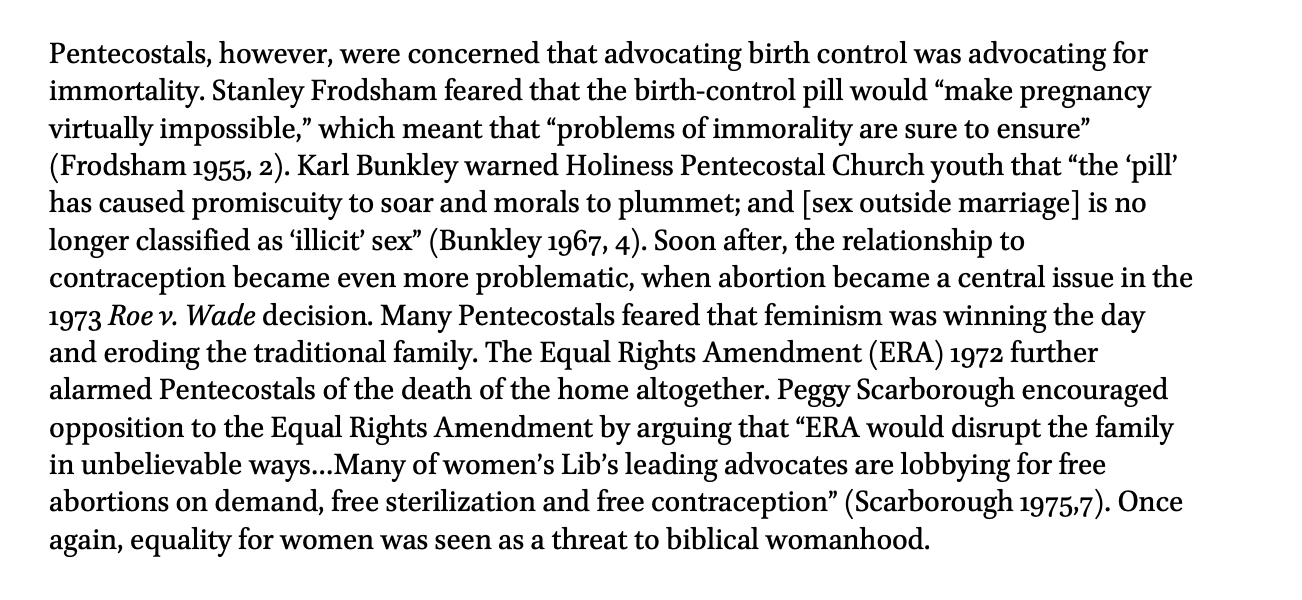
Another fascinating discussion is the shifts in attitudes among Pentecostals regarding contraception and birth control. There were two factors that were shaping these attitudes. On the one hand, the value of the family and procreation was emphasized. At the same time, racial concepts and attitudes about women were part of that motivation. Here is an excerpt of a long narrative that provides significant insight.
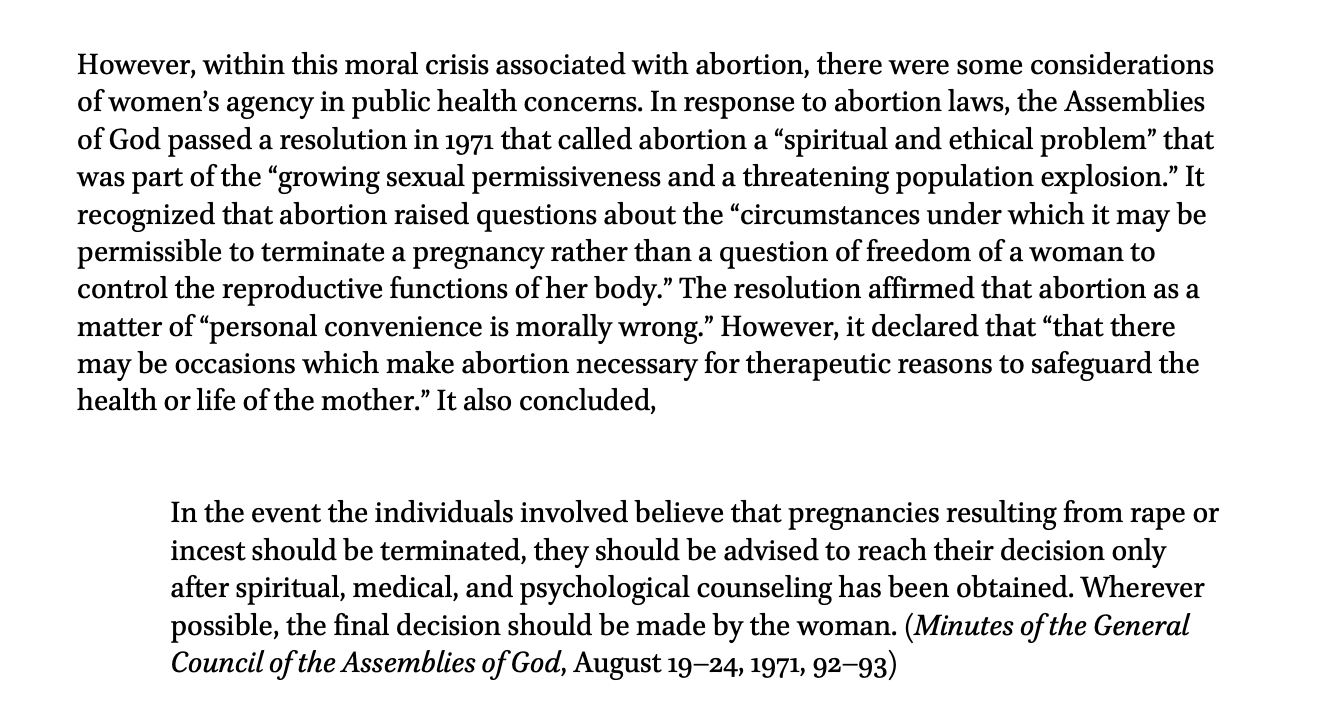
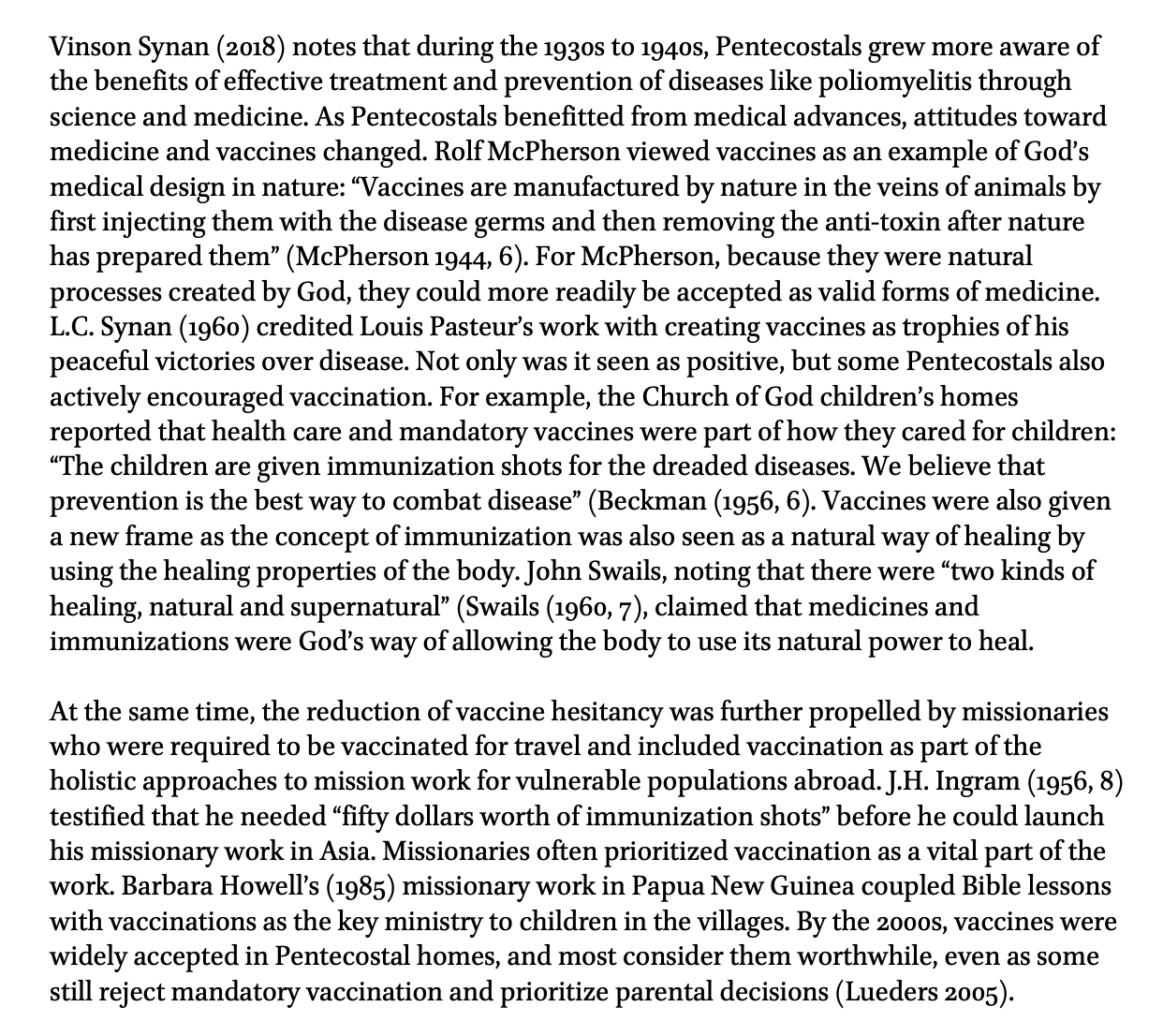
Another great discussion is how Pentecostals slowly normalized acceptance of vaccines. While a tension throughout history, Pentecostal missions were a catalyst for normalizing vaccines.
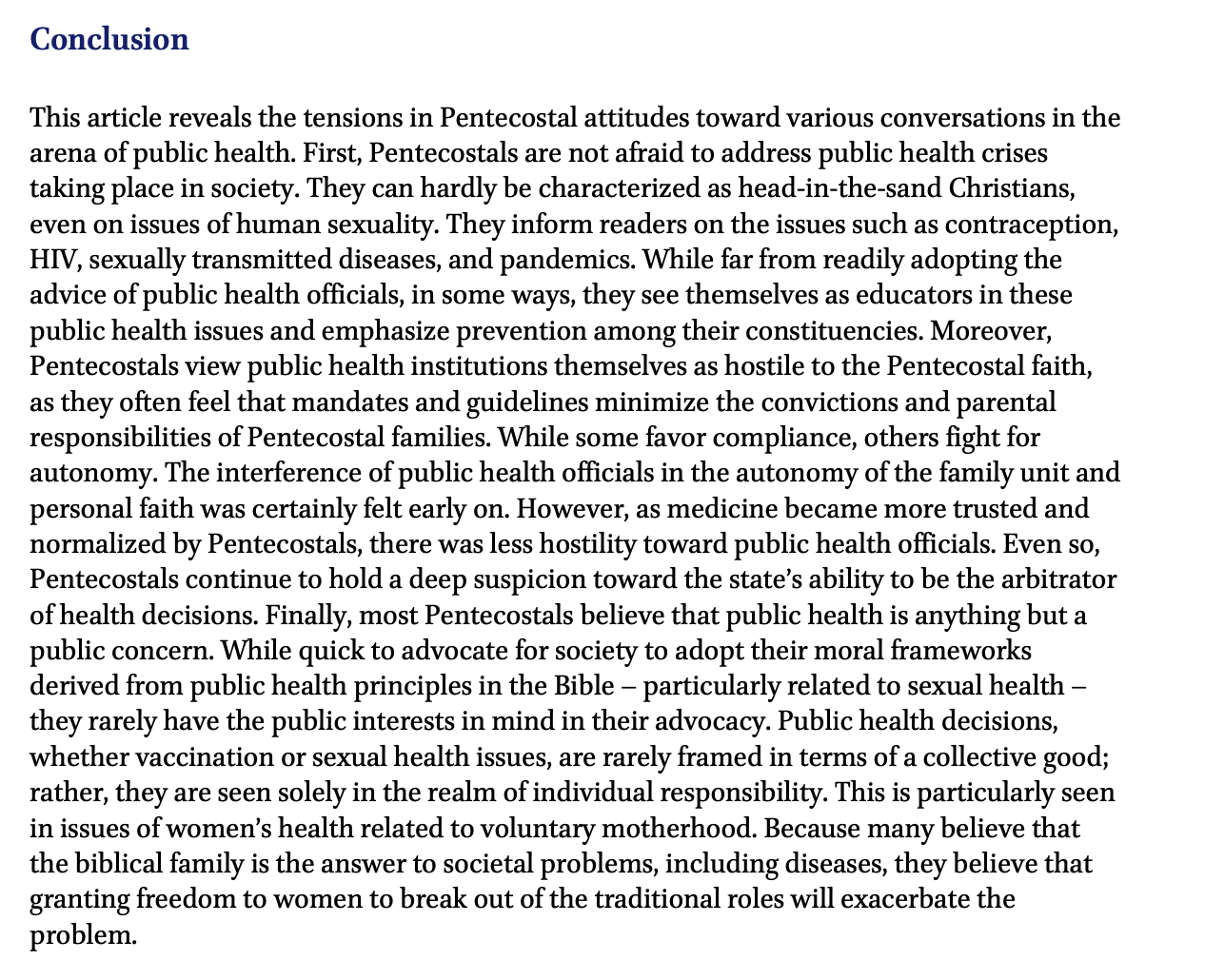
The following excerpt from the conclusion summarizes the article’s findings. I think it reveals how characterizations of Pentecostals as anti-medicine or public health are perhaps more nuanced than people may think. I say it this way.
I hope this essay will influence how people view Pentecostals, especially in light of the high profile of Spirit-filled churches’ participation in the controversy in the modern politicization of public health in recent years.


This is interesting. I have tended to view the more recent debates around vaccines, masks, etc. in isolated terms. But this sets those debates within a larger framework. Seeing that Pentecostals have tended to lean toward the individual and the family, over against society broadly defined, makes the tendencies we’ve seen in the last held decade or so make more sense (whether one agrees with those tendencies or not). Thank you.